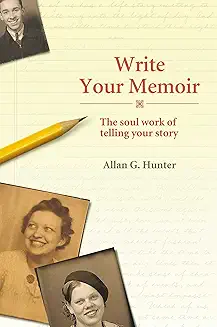
Overall Theme: This writing guide emphasizes that memoir writing is a journey of self-discovery (“soul work”) and personal transformation, not merely a recounting of events. It focuses on providing exercises and guidance to unlock memories, understand their deeper meaning, and craft a compelling narrative. The book highlights the potential for healing and growth through the process of writing one’s life story.
1. The Purpose of Memoir Writing:
- Self-Understanding: Memoir writing is presented as a way to make sense of one’s life, recognize patterns, and achieve a deeper understanding of oneself. As one student wrote, “I write because somehow, when I’m doing it, I begin to see the shapes and patterns of my life, and it begins to make sense to me.”
- Rehabilitation and Transformation: The guide illustrates how memoir writing can be a tool for personal rehabilitation. The example of Kenny Wightman, a convict, highlights how writing his life story allowed him to reassess his past, understand his motivations, and ultimately change his life for the better. “In being able to stand outside his personal experience he could see his actions and judge his life from a different perspective… He was, in this way, rehabilitating himself by writing his story. Each day he was saving his soul, one paragraph at a time.”
- Transcending the Self: Memoir writing can extend beyond personal catharsis and offer value to others. By sharing their story, writers can provide insights into the human condition and potentially help others avoid similar pitfalls. “When he saw that, he saw that the story was not merely about himself, but it was a story that reached out to others. It transcended him.”
2. The Writing Process:
- Individualized Approach: The guide rejects a “cookie-cutter” approach to memoir writing, emphasizing that each writer’s journey and narrative will be unique. “There are no cookie-cutters here. One size will not fit all.”
- Active Engagement: The guide stresses the importance of actively engaging in the writing exercises to unlock memories and uncover deeper meanings. “If this process is to work properly you cannot just think about doing them, you’ll actually have to put pen to paper (or fingers to keyboard) and write. In this way you’ll learn to value the memories you have and allow them speak to you.”
- Listening to Your Life: The book encourages writers to listen to the “prompting that comes from deep within” and to be prepared to listen to what their story asks of them. “This is your story telling you how it needs to be told. So, be prepared to listen to what it asks of you.”
- Creating Space and Rituals: The guide recommends creating a dedicated writing space, establishing a writing routine, and rewarding oneself for achieving writing goals. It also speaks to the value of creating a “Writer’s Shelf” or “Treasure Chest” filled with objects related to your life/memories that will help you write. “If you don’t schedule a space in your life for your writing I guarantee that you will not get around to doing it. It’s as basic as that.”
- Dealing with Writing Blocks: The guide emphasizes the importance of acknowledging and addressing writing blocks, as they often point to difficult but essential material that needs to be explored. “Acknowledging a blockage right away allows for it to be dealt with and overcome, and for the riches to be accessed that inevitably lie on the other side of the block.”
3. Exercises and Techniques:
- Photograph Analysis: Examining old photographs to unlock memories, connect with the past, and identify strengths and sources of pain. “So look at that picture and ask yourself what’s reflected back at you… What were your strengths even at that age? If you don’t know, now would be a good time to find out.”
- Message Identification: Reflecting on the messages received from family members about one’s identity and how those messages have shaped one’s life. “Thinking about these ‘messages’ can be very useful because we are, to some extent at least, what we believe about what other people say we are, and how they treat us.”
- Non-Dominant Hand Writing: Engaging in a dialogue with one’s inner critic using the non-dominant hand to access less rational and more creative aspects of the mind.
- The “Three Gifts” Visualization: A guided visualization exercise designed to uncover what one feels they need to move forward with their writing and their life.
- The “Because” Exercise: A repetitive sentence structure exercise designed to peel away layers of meaning and uncover the core motivations behind writing one’s life story. “‘I’m here because I’m sitting at a desk to write; I’m sitting at a desk to write because I think I have a memoir inside me; I think I have a memoir inside me because I have a story to tell about my father; I have a story to tell about my father because I’ve never forgiven him…’”
- Recalling Specific Sensory Details: Focusing on specific details of time and place, especially tactile, scent, and flavor sensations as a tool for remembering.
- “Jabberwock” Drawing: A visualization/art exercise where the author asks readers to draw a Jabberwock from the Lewis Carroll poem, in order to see their “very own private monster” – the things that get in their way when they try to do their soul work.
- Remembering/Writing Scenes: The author encourages readers to think of writing as remembering scenes, like a movie director.
4. Structure and Narrative:
- Basic Structure: The guide acknowledges the importance of a beginning, middle, and end, but stresses that the structure should emerge organically from the story itself.
- Identifying Turning Points: Exercises are provided to help writers identify key moments of change in their lives, which can serve as structural pillars for their memoir.
- Memoir is Never Just About You: The writer should be the observer of a situation, and the audience should care about that.
5. Ethical and Practical Considerations:
- Truthfulness and Accuracy: The guide encourages writers to strive for honesty and accuracy in their recollections, while acknowledging the limitations of memory.
- Sensitivity to Others: While encouraging writers to tell their truths, the guide also advises them to be mindful of the impact their stories may have on others and to consider changing names or combining events to protect privacy.
- Confronting Fears: The guide acknowledges that memoir writing can be a challenging and emotional process and encourages writers to embrace their fears as a sign that they are undertaking a worthwhile task. “As we observed right at the start of this book, writing your memoir will change you; and your fears about telling your truths are indicative that the change is happening.”
- Not being afraid to describe faults: The author emphasizes that there is no need to censor yourself at the beginning and that being able to fully write out all aspects of the story – even parts one doesn’t like – is critical.
6. Six Stages of Memoir Writing:
- The Innocent: Approaching the task with trust and openness.
- The Orphan: Facing challenges and feeling alone in the process.
- The Wanderer: Seeking guidance and exploring different paths.
- The Warrior-Lover: Displaying tremendous energy and courage.
- The Destroyer: Breaking down old patterns and beliefs.
- The Magician: Achieving a place of understanding, compassion, and wisdom.
7. Memoir is Liberation:
- The author states that in England, there used to be a popular question of “the unexamined life is not worth living” but rarely did anyone encourage actually doing this examining. Memoir can help the writer and reader understand the value of the examined life.
The book “Write Your Memoir” contains numerous exercises designed to help you explore your memories and develop your memoir. Here’s a compilation of the practical exercises mentioned in the sources:
Picture of Yourself as a Small Child Find a picture of yourself as a small child, preferably around four or five years old, and write down your thoughts about that child. Consider what you see, who that child was, and any memories or thoughts connected to the picture.
Messages from Childhood Jot down the things you heard while growing up. Who was expected to do what? Who got punished and who escaped? Who was in charge, and who wasn’t? Write down as many of these ‘messages’ as possible.
Creating Your Book Cover Imagine your memoir is published, and design the cover, complete with the title and back cover blurb. The blurb should be a hundred words or less.
Floor Plan of Your Childhood Home Try to remember the house or home you lived in as a child. Draw a floor plan from memory, including as many details as you can recall.
The Three Gifts Exercise Visualize a scene where you are given three gifts. Reflect on the gifts, who gave them to you, and what they mean to you.
“I’m here because…” Exercise Take a new piece of paper and write at the top, “I’m here because…” Finish the sentence, then take that newly added half of the sentence and make it the start of the next sentence, adding the word ‘because’. Continue this exercise as far as you can.
Twelve Moments of Change Write down twelve moments in your life that you feel marked a point of change. Then, select six from your list and put those six in order of importance.
Turning Points in Others’ Lives Identify the major turning points in the lives of those people you found it difficult to deal with. Try to find twelve points, cull them down to six and then to four, and ask the same questions you asked of your own experience.
Conversation With the Inner Voice Write a conversation with the voice in your head that is questioning the content of your memoir. Using your dominant hand, ask the voice why it wants to know the answers before you’ve finished writing. Then, take a pen in your non-dominant hand and write the answer.
Proud Moments Exercise Think about an event in your life that you feel you can be proud of. With a partner, take turns speaking about the event for two minutes while the other listens. Then, the listener repeats back everything they can recall.
Drawing a Jabberwock Imagine what a Jabberwock might look like and draw one. Label things on your diagram.
In addition to these specific exercises, the book also suggests incorporating writing prompts into your daily practice, especially when you feel uninspired. These prompts cover a wide range of topics, from family stories and favorite meals to fears, achievements, and personal relationships.